


In this article you will discover:
- How the shopping bag transforms from a simple container to an omnichannel touchpoint that accompanies the customer across boutiques, e-commerce, and events.
- How to use materials, finishes, and messages to create a sensory experience consistent with brand values, sustainable, and recognizable.
- Why the certified traceability of materials and processes becomes a competitive advantage in terms of reputation, trust, and risk management.
The shopping bag as an omnichannel touchpoint
For many years, the shopping bag was considered a “necessary cost” of the point of sale: it served to transport the product, nothing more. Today, especially in fashion and cosmetics, it is a true physical medium, extending the brand experience through time and space. In luxury, the boundaries between boutiques, e-commerce, and digital channels are dissolving: the customer expects consistency in visual language and service wherever they come into contact with the brand. The shopping bag is one of the most photographed, reused, and carried around objects – a mobile “micro-showcase” that continues to communicate long after the purchase. For major brands, this means rethinking the bag not only in terms of the product (sizes, weight, fragility) but of the journey: from the flagship store to unboxing at home, from special events to social campaigns, up to everyday reuse in various contexts.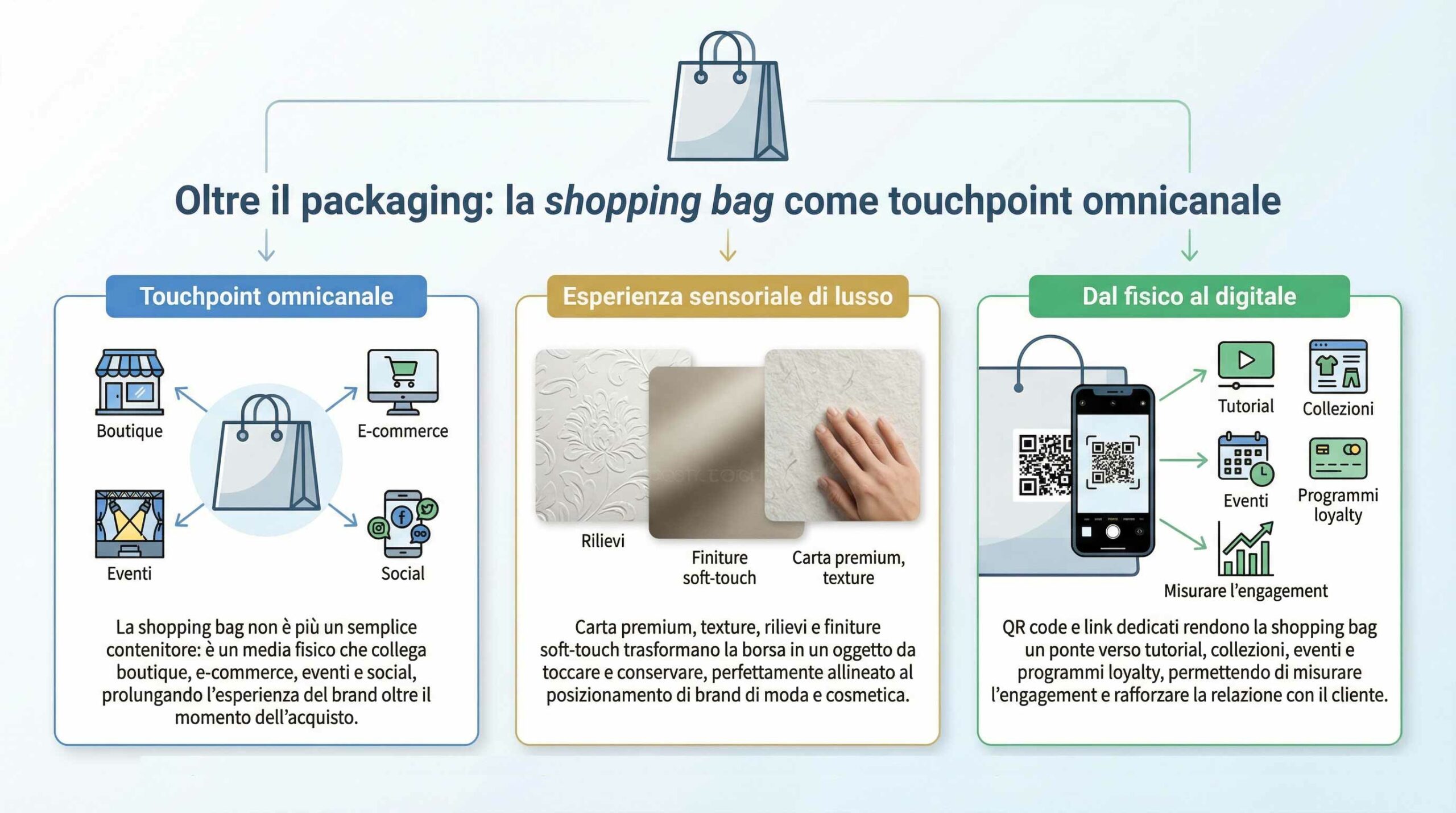
Consistency across physical retail, e-commerce, and events
A fashion or cosmetic brand today can no longer afford “disconnected” shopping bags depending on the channel. The challenge is to orchestrate a family of bags that, while adapting to different contexts, tell the same story.financialcontent+1- In boutique: manual and premium shopping bags, with high-weight paper, rope or ribbon handles, and high-quality finishes (embossing, soft-touch lamination, glossy details) that convey the idea of investment and value.
- For e-commerce: lighter and shipping-optimized solutions, but coordinated in terms of colors, logos, patterns, and tone of voice; the bag can be folded in the box and become part of the unboxing experience.
- For events and gifts: dedicated gift bags that combine practicality and aesthetics, with special formats, diverse handles, and graphic layouts designed to be photographed and shared.
Sensory experience: from touch to sight
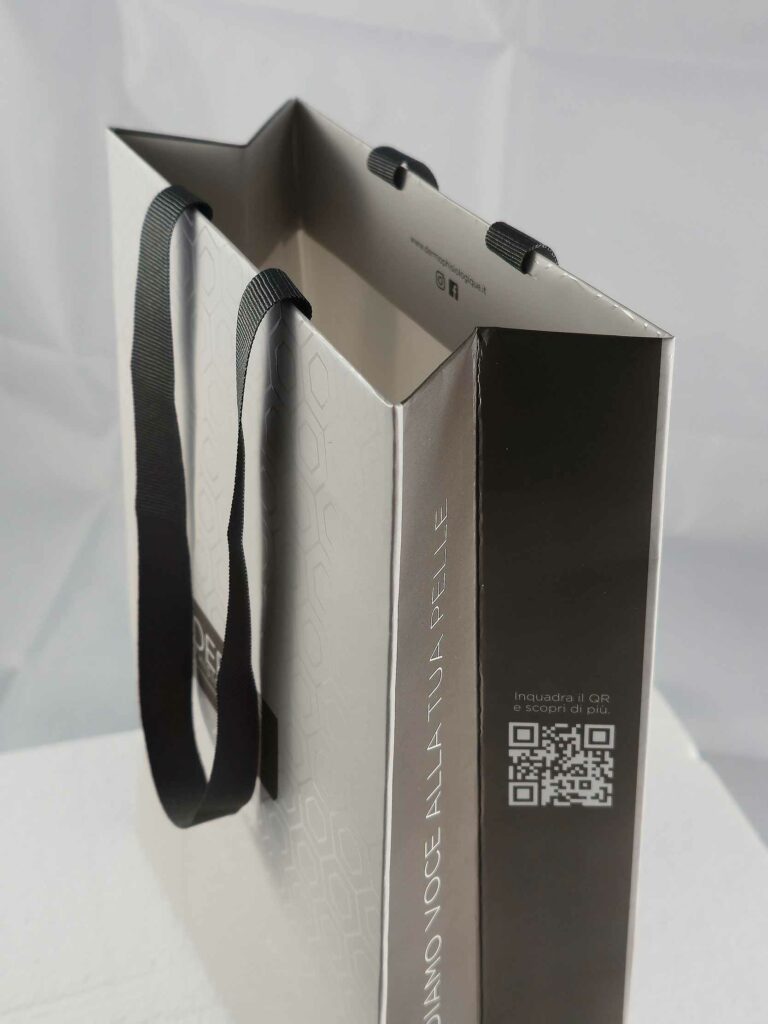
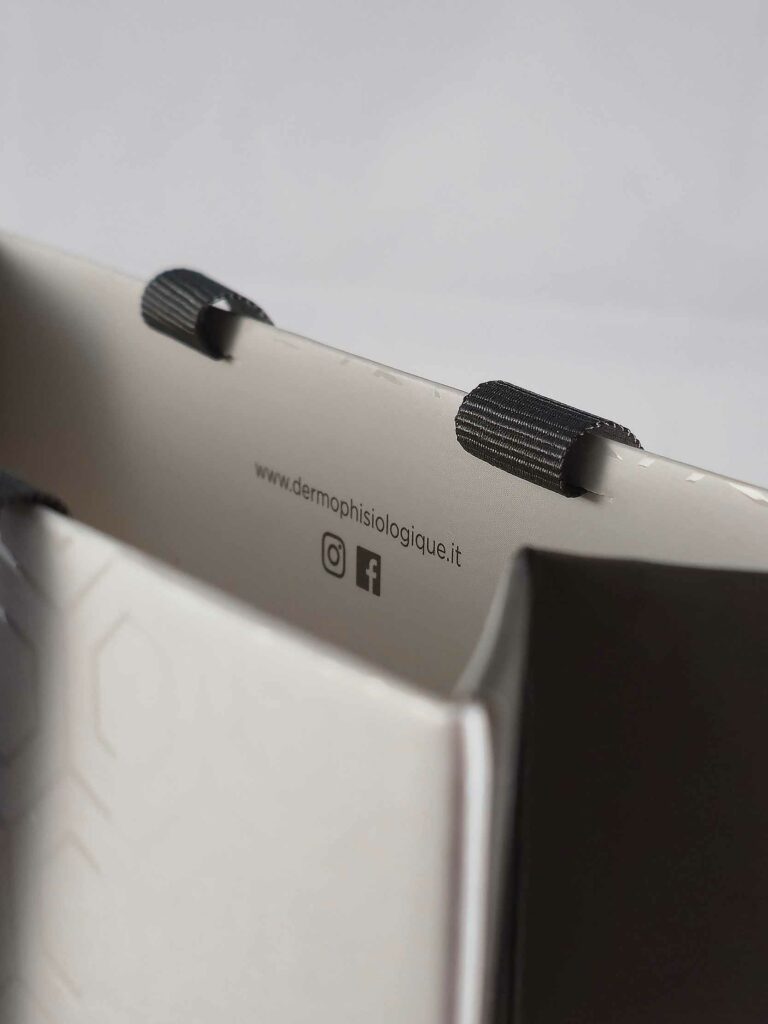
In the premium segment, the shopping bag is primarily a sensory experience: it is touched, looked at closely, and compared with other bags. Your product families (manual, premium shopping bags, gift bags, solutions with embossing and special papers) already work on these drivers, which can be explicitly brought to the center of the discussion. Key elements:- Paper and weight: full-bodied papers with light textures give an immediate sense of solidity and luxury, even when the bag is visually “minimal”.
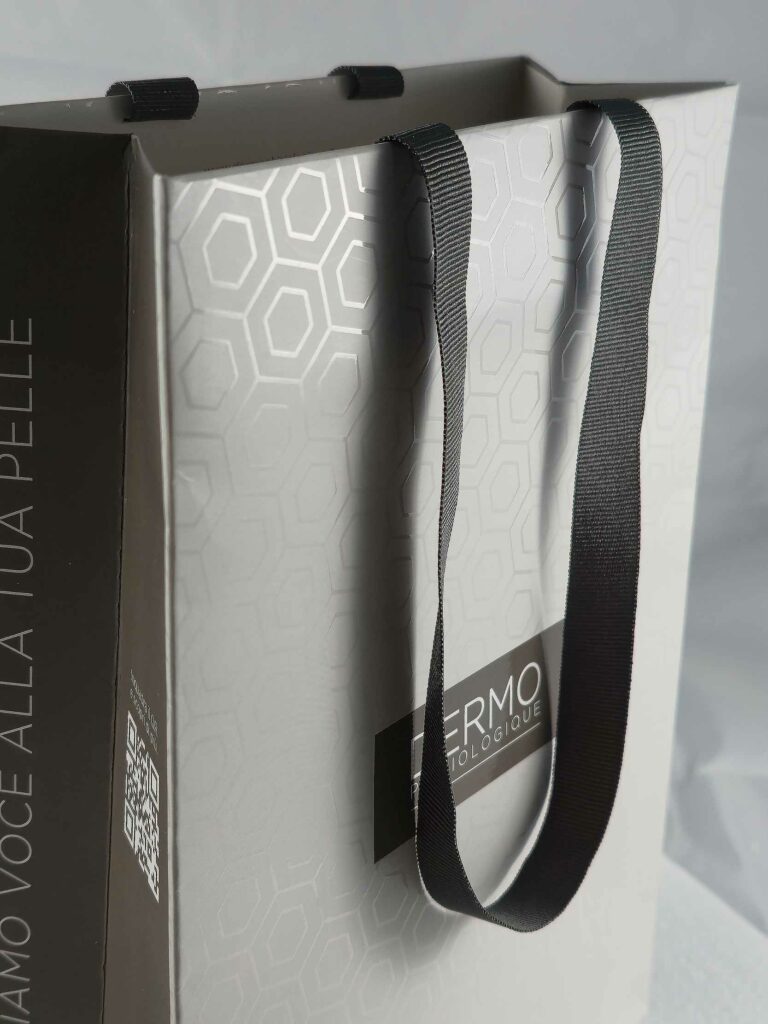
- Embossing and reliefs: tactile patterns that recall the brand’s world (textile weaves, natural elements, geometries) increase memorability and perceived value.
- Surface finishes: soft-touch lamination, spot gloss varnishes, metallic or pearlescent details allow you to orchestrate the contrast between matte and gloss that the customer “feels” even before reading the logo.
- Proportions and handles: the choice between cord handles, flat handles, fabric ribbons, or custom solutions affects ergonomics and the perception of comfort and sturdiness.
From physical to digital: the bag as an interactive medium
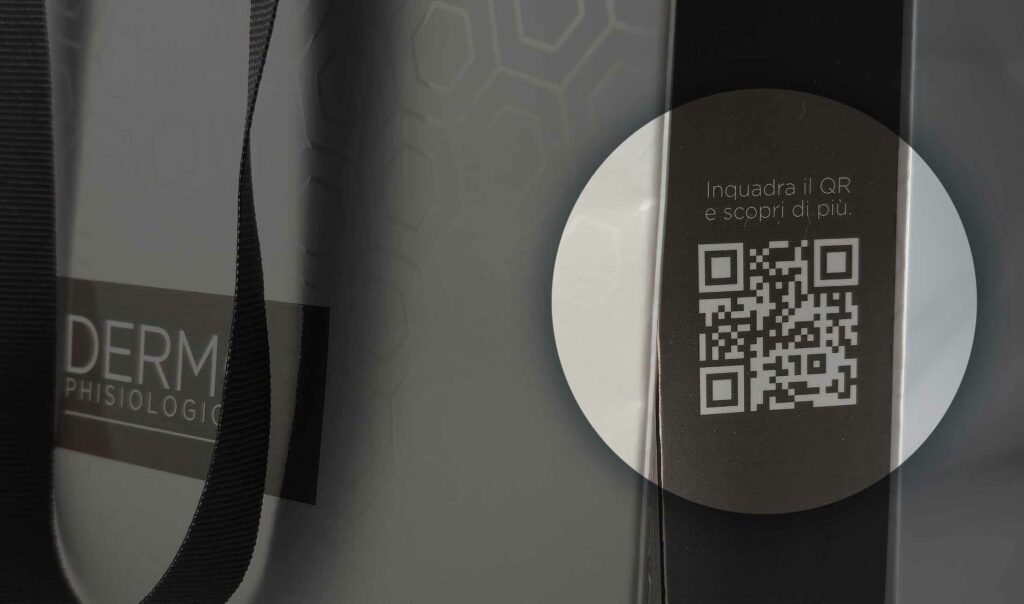
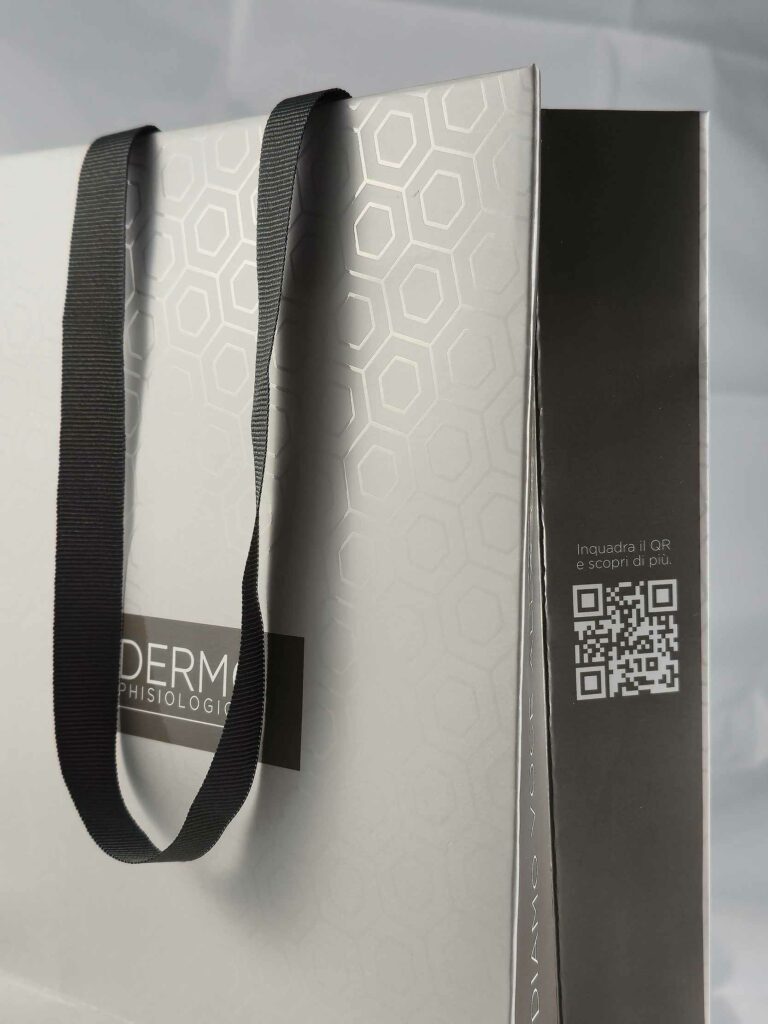
The strength of the shopping bag today lies in the ability to connect the physical gesture of carrying it to a personalized digital experience. Global trends in luxury retail are pushing towards increasingly seamless integrations between packaging objects and online content.markets.financialcontent+4 Some examples of strategic use:- Discreet QR codes (on the bottom, inside, on one side) that lead to dedicated content: make-up tutorials, collection lookbooks, material sustainability stories, invitations to exclusive events.
- Campaign tracking: different QR codes or personalized URLs for flagships, pop-up stores, events, and partnerships allow for the measurement of the real return on retail initiatives.
- Social activations: soft call-to-actions (a micro-text, a symbol, an invitation inside the bag) that encourage the user to share their unboxing or look with the brand’s hashtag.
Credible sustainability: responsible materials and processes
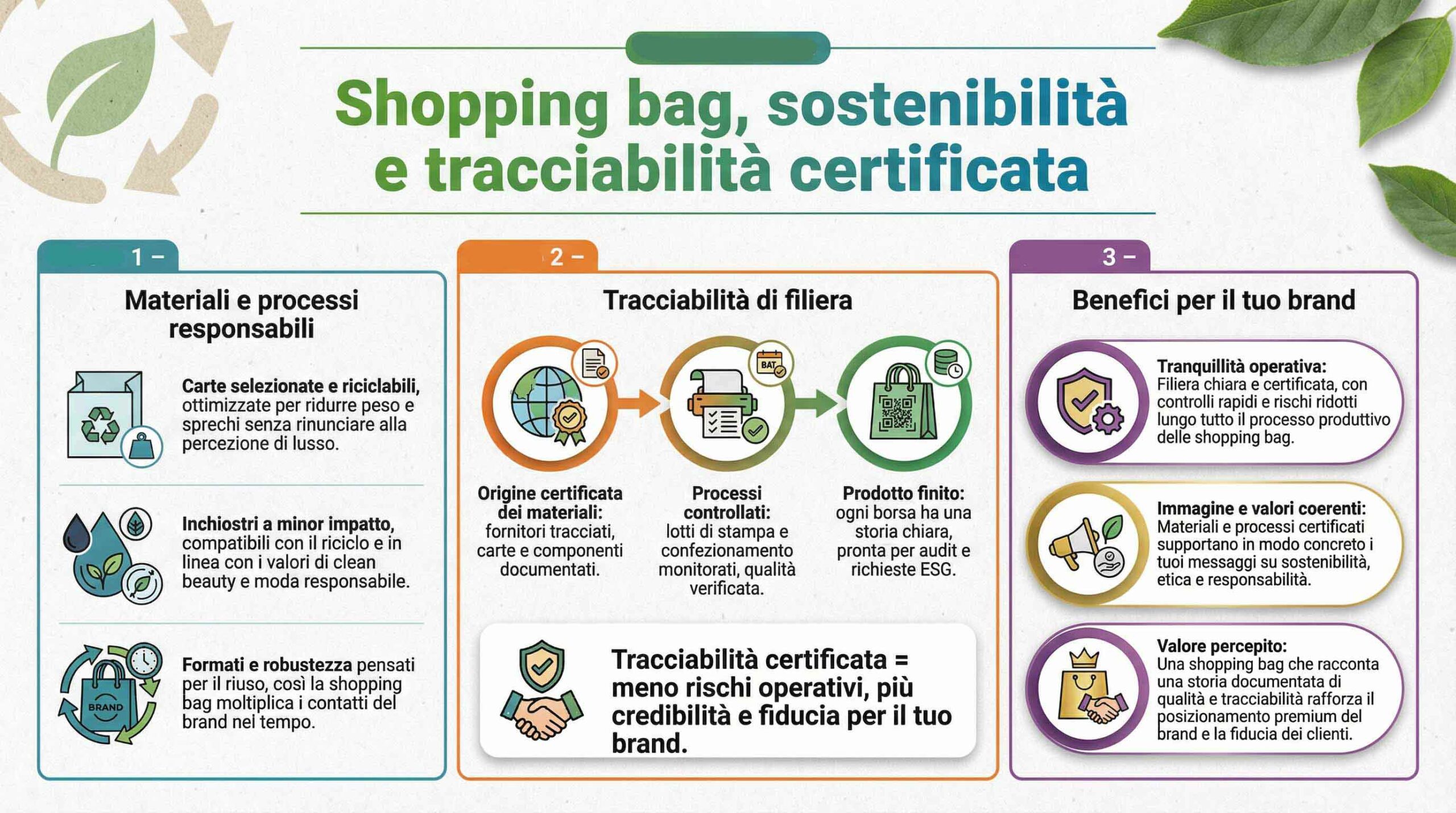
In your magazine, you have already started talking about choices such as water-based inks, certified papers, recyclability, and impact reduction. For major fashion and cosmetic brands, the next step is to transform these choices into structured and verifiable communication topics.taffarello+2 The most relevant trends:- “Lightweight luxury”: reducing weight and waste while maintaining the premium effect, through selected papers, smarter designs, and size optimization.
- Recyclability and reuse: designing bags that can be reused (desirable formats, sturdiness, designs that people want to keep) and easily sorted at the end of their life.
- Inks and treatments: preferring lower-impact solutions, compatible with recycling and consistent with brand messages (for example, when communicating clean beauty, vegan, cruelty-free).
Certified traceability: from operational risk to brand value
Supply chain traceability arises as a technical need: knowing where each material comes from, how it was processed, in which batch it was used, and to whom it was delivered. In more regulated sectors, there are specific standards (such as supply chain traceability regulations or dedicated certification schemes) that require clear procedures and accurate records. Applied to the world of shopping bags for fashion and cosmetics, certified traceability means:- being able to accurately trace the origin of papers and semi-finished products, suppliers, and their respective certifications;
- having documented evidence of the printing, cutting, and packaging processes, with quality controls associated with the batches;
- being able to intervene quickly in the event of non-compliance, limiting reputational risks and the costs of potential recalls.
Why work with a partner oriented towards certified traceability
For a major fashion or cosmetic brand, choosing a company like Taffarello – which combines product experience, strong attention to materials and processes, and a culture of traceability – means reducing internal complexity and increasing the perceived value of the packaging.taffarello+2 Key advantages:- Operational peace of mind: a tracked and certified supply chain reduces risks related to opaque supplies, non-compliance, and quality issues that are difficult to contain.smartpackaginghub+2
- Image consistency: the use of certified materials and processes concretely supports the promises of sustainability, ethics, and attention to detail that major brands communicate in their campaigns.
- Storytelling value: being able to tell not just “a beautiful shopping bag,” but a bag whose history – from paper to printing – is documented and verifiable, strengthens premium positioning and the perception of responsibility.
- Internal efficiency: clear standards of traceability and certification simplify audits, controls, ESG reports, and compliance requests from international retailers or multinational groups.
Request Your Free Consultation Now
Contact the Taffarello team today. Together, we will design the perfect shopping bag to tell the unique story of your brand, down to the smallest, surprising detail.